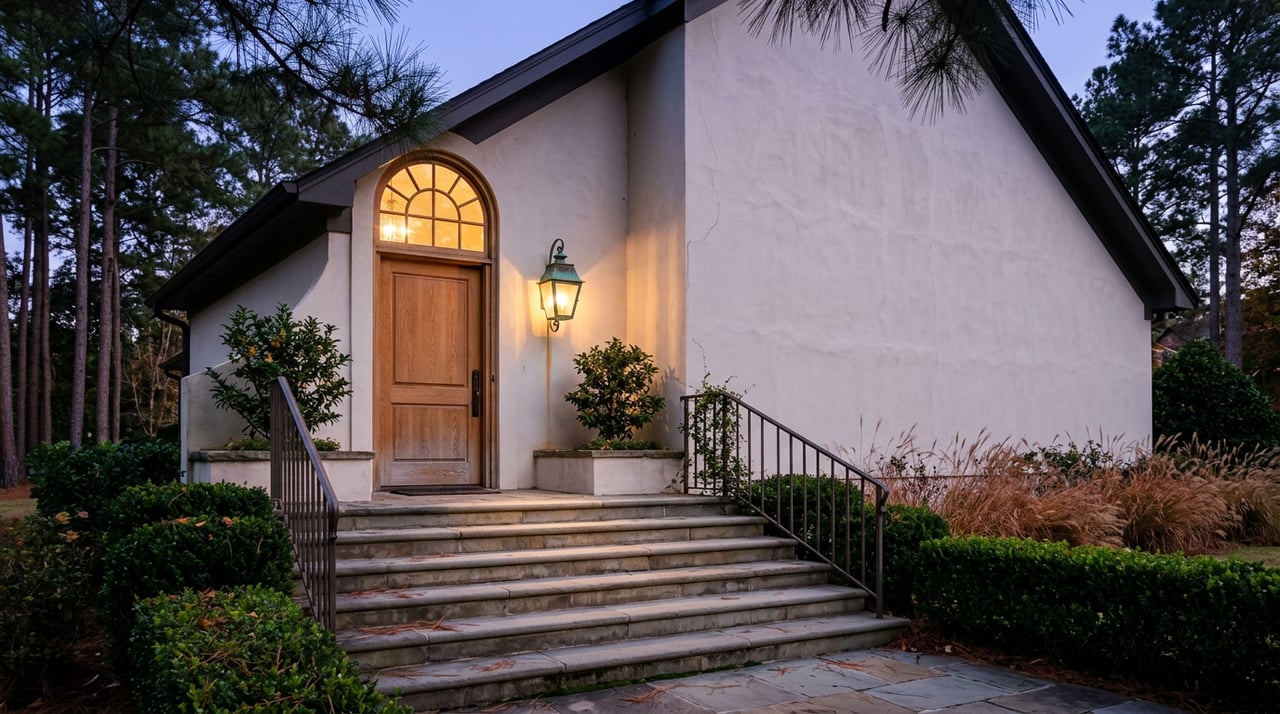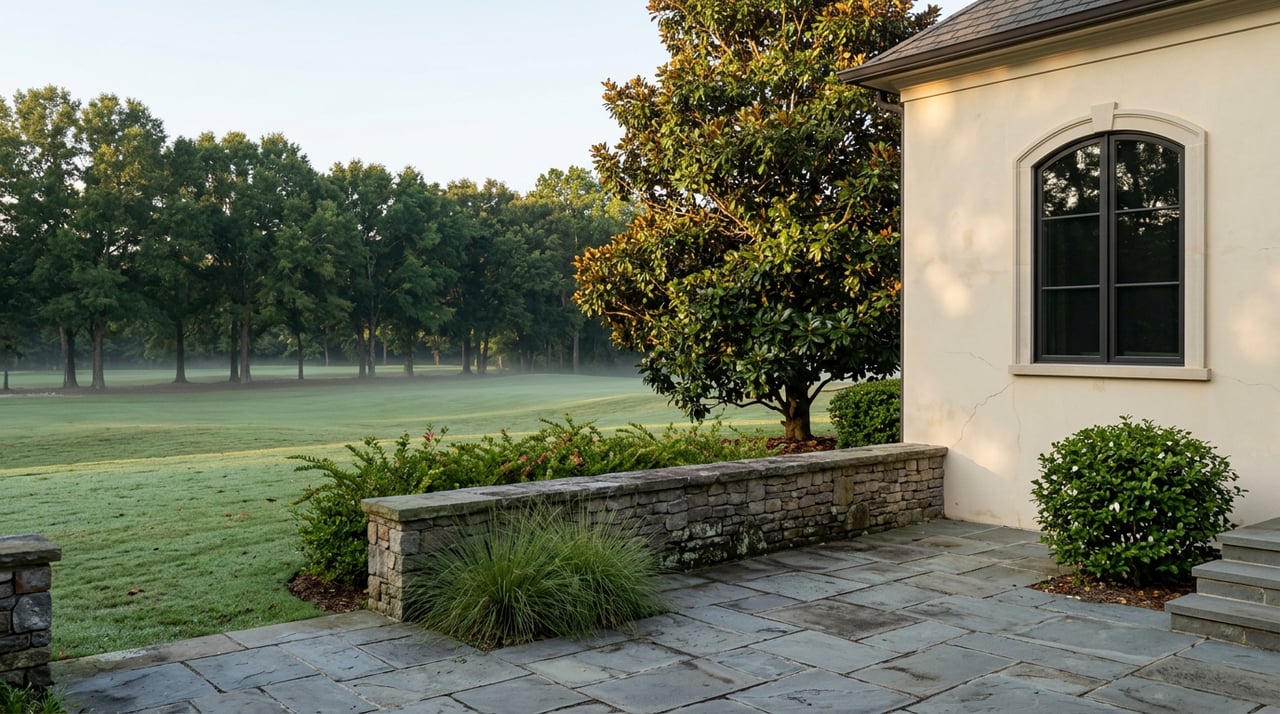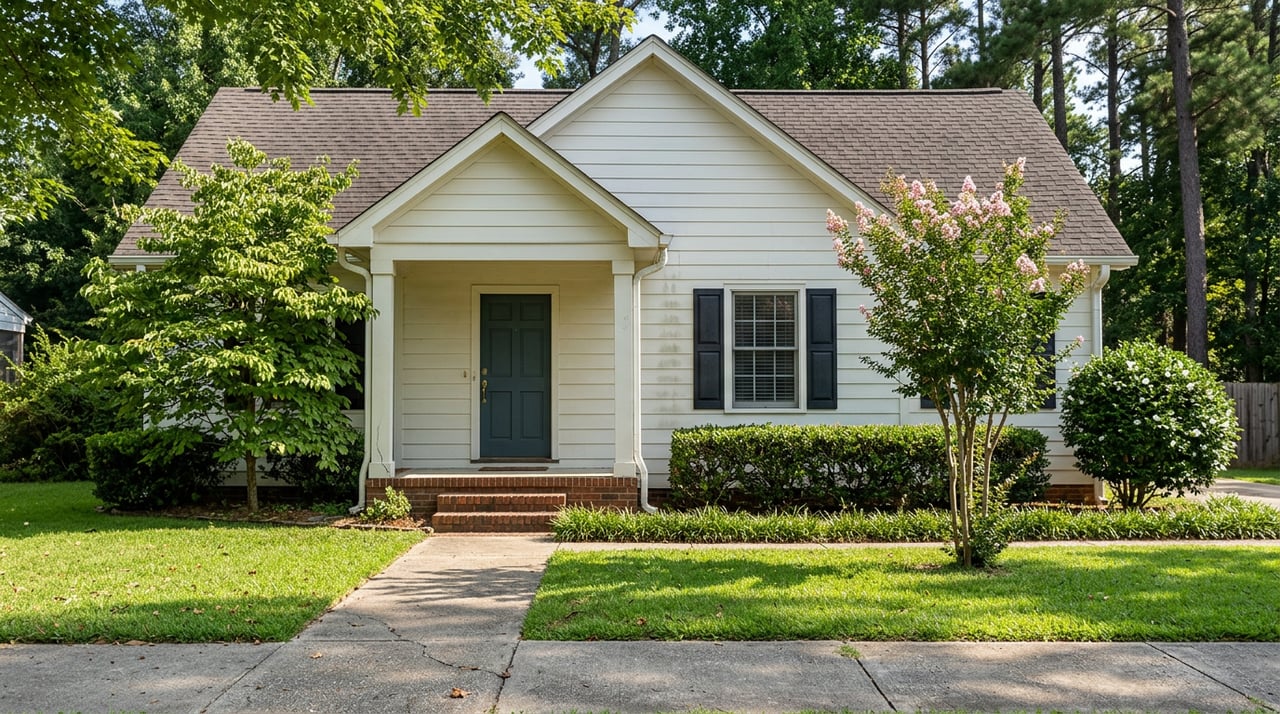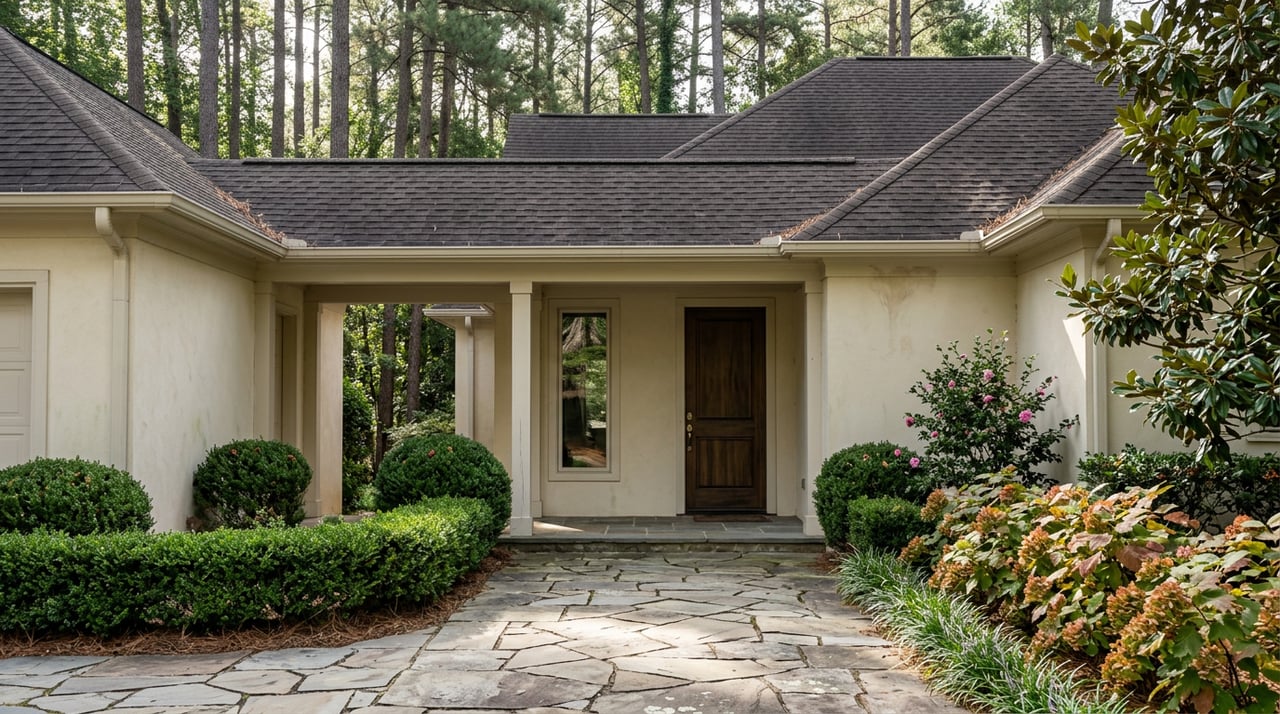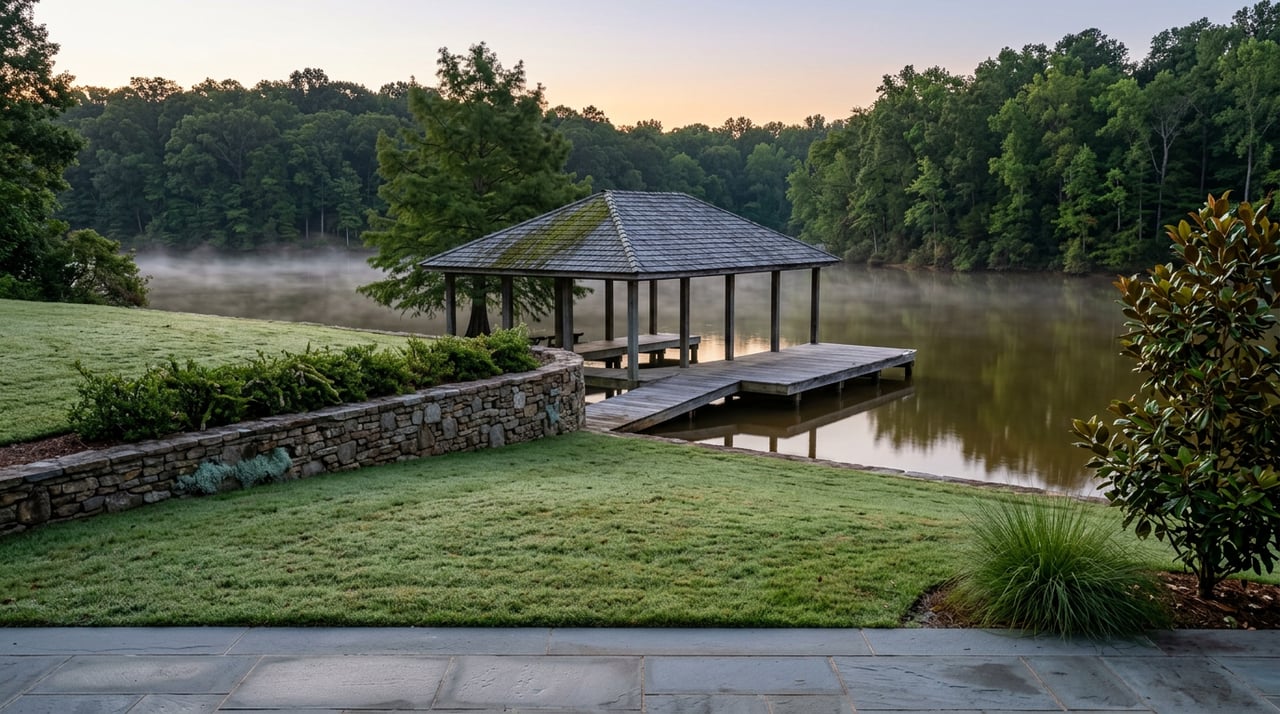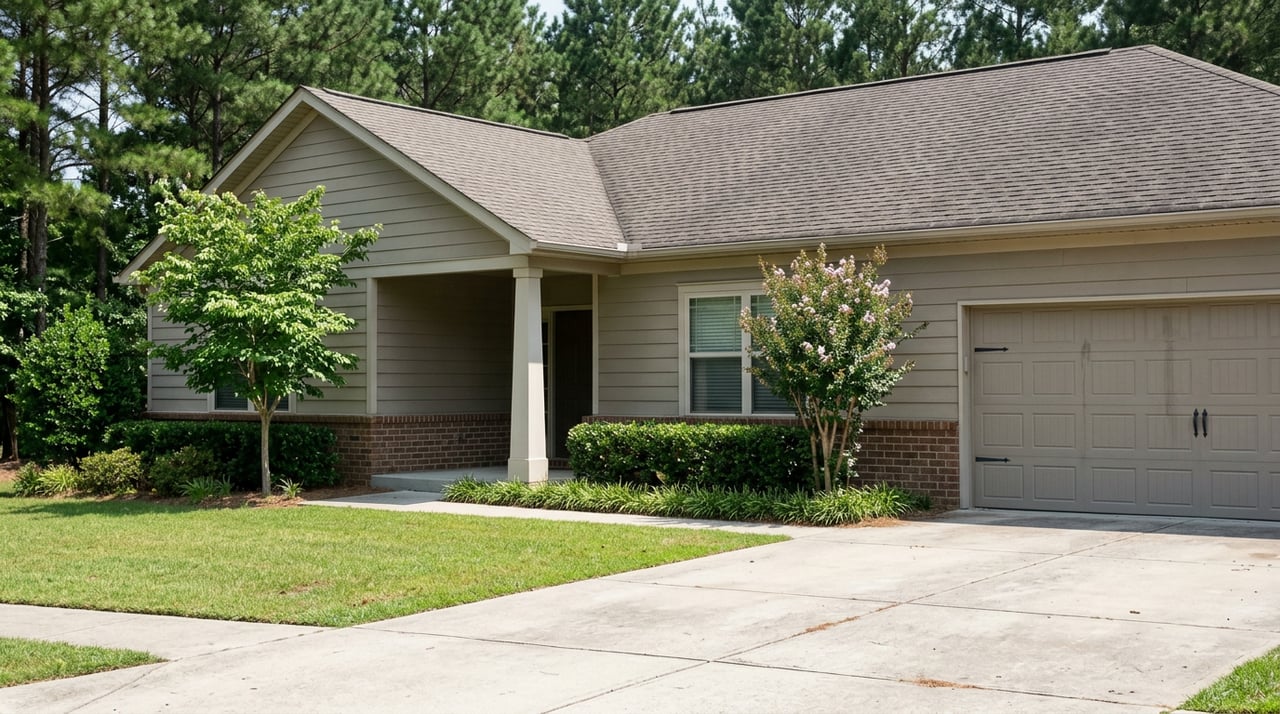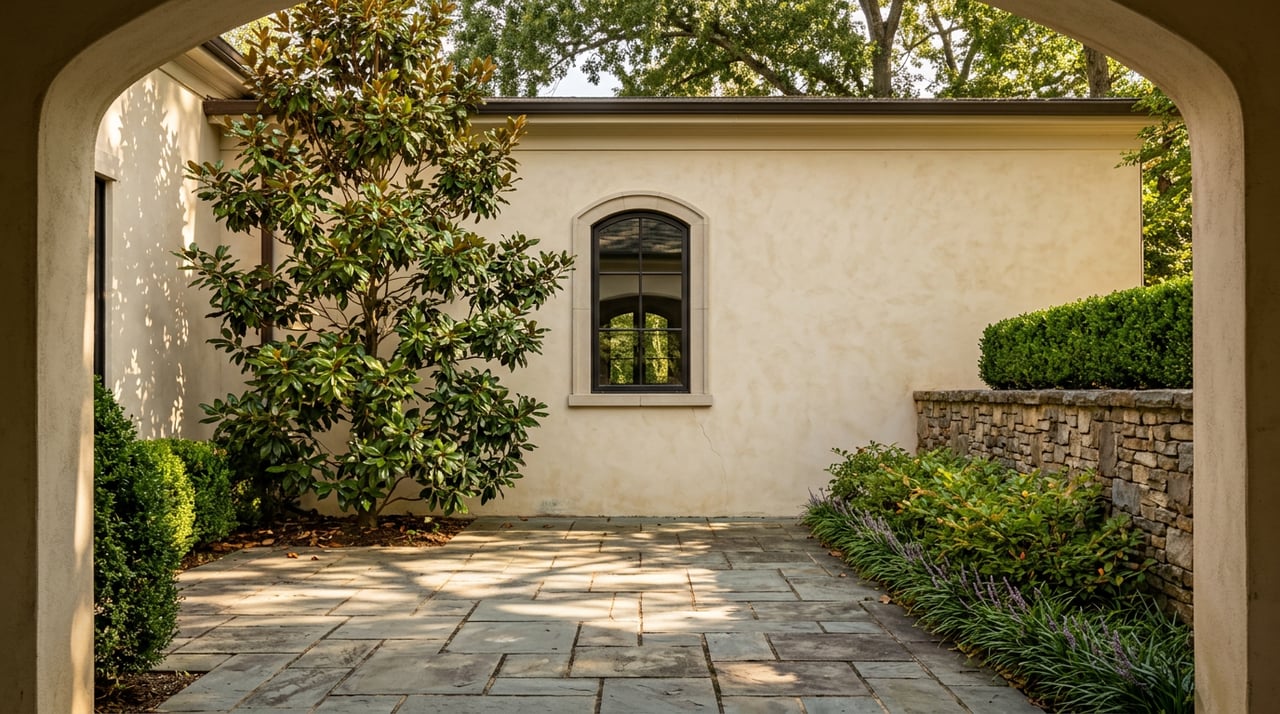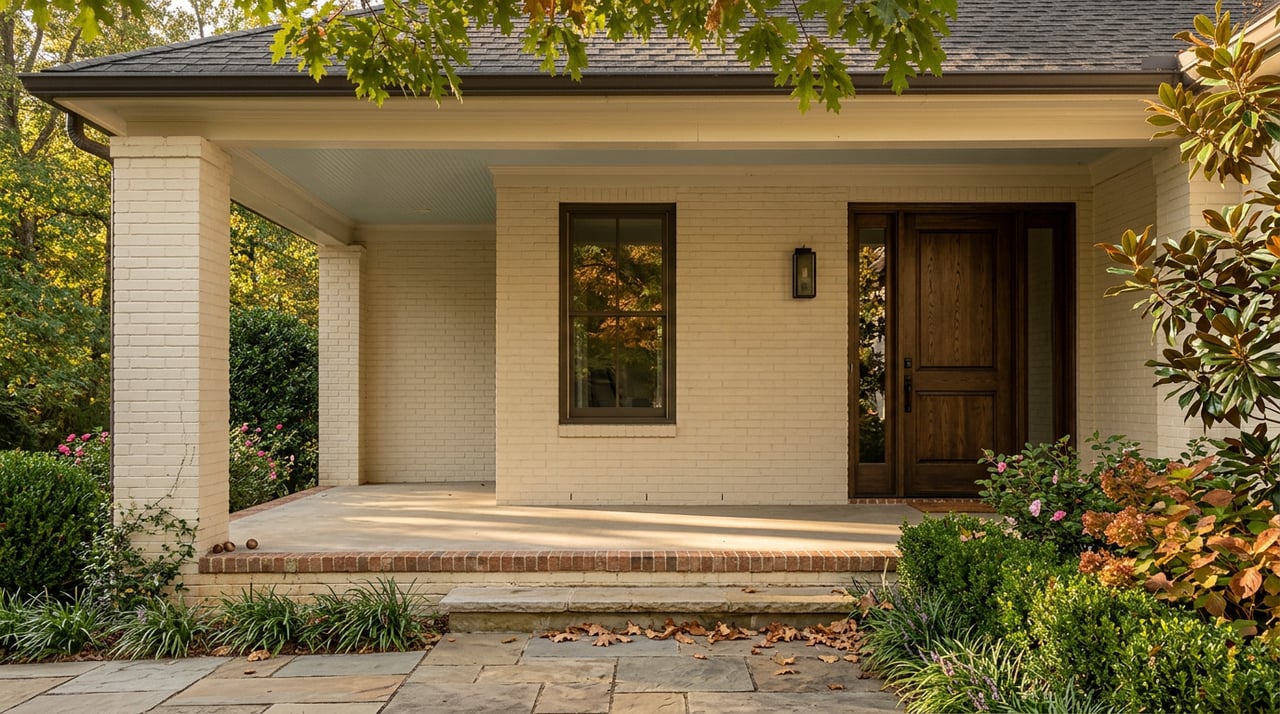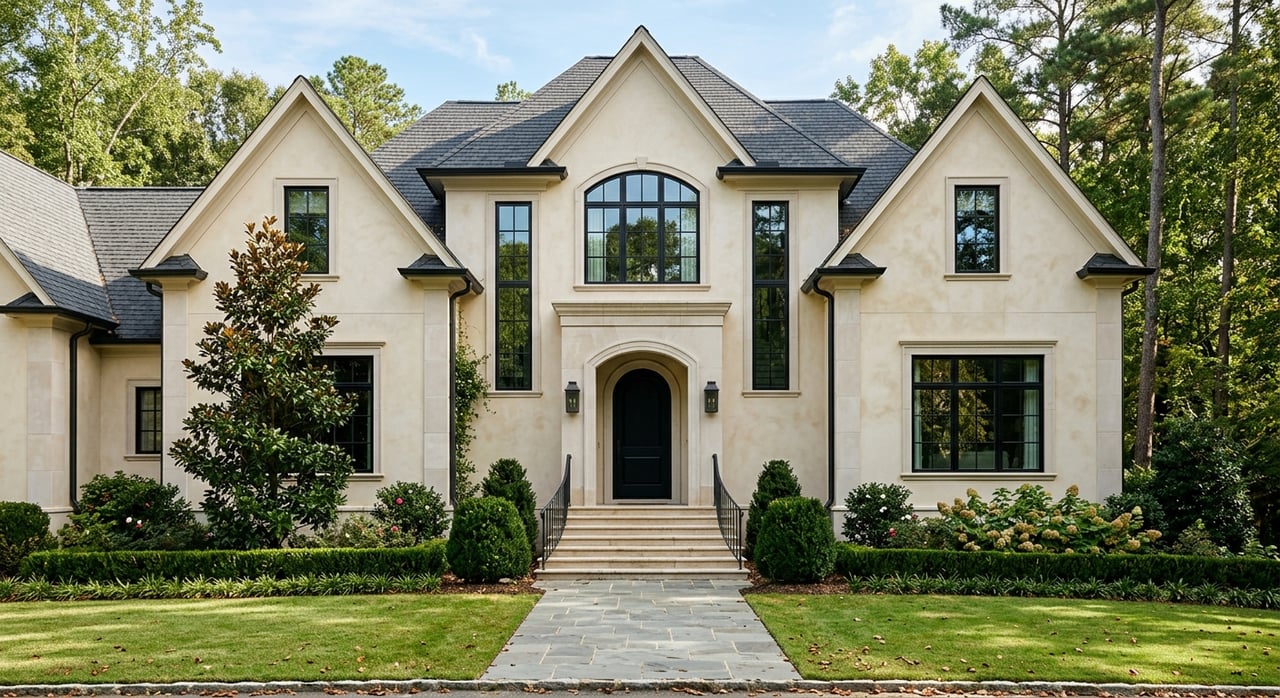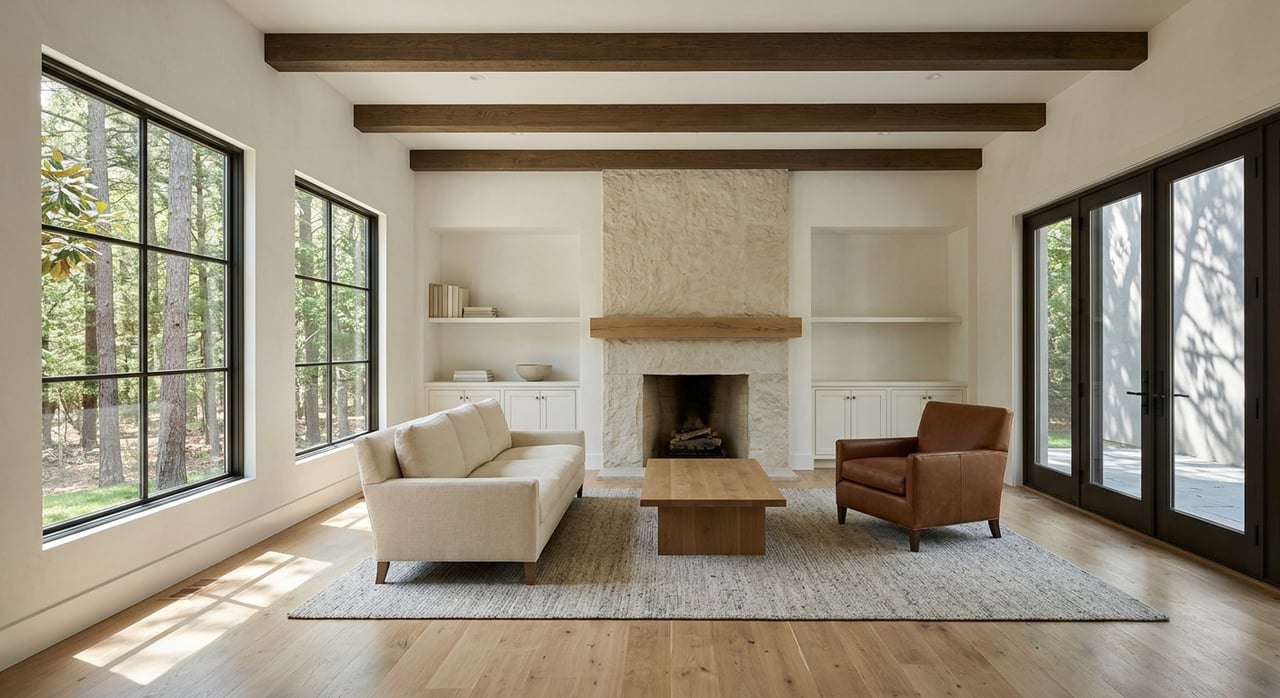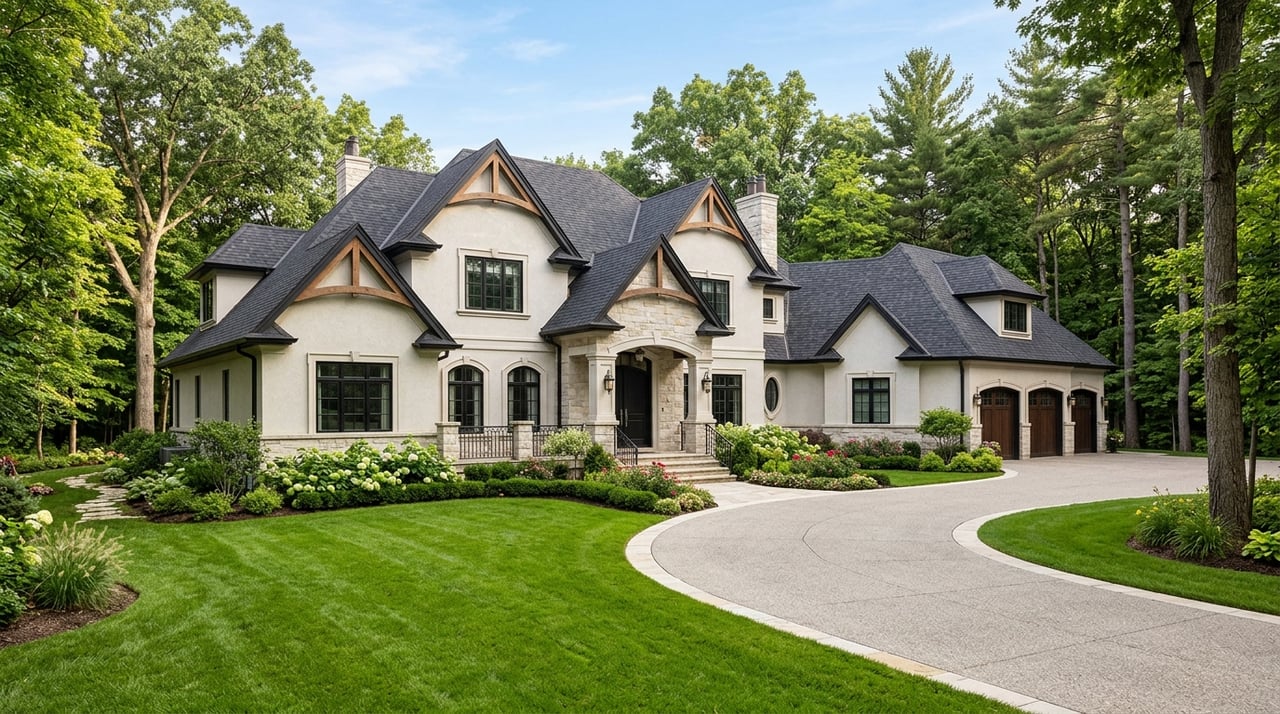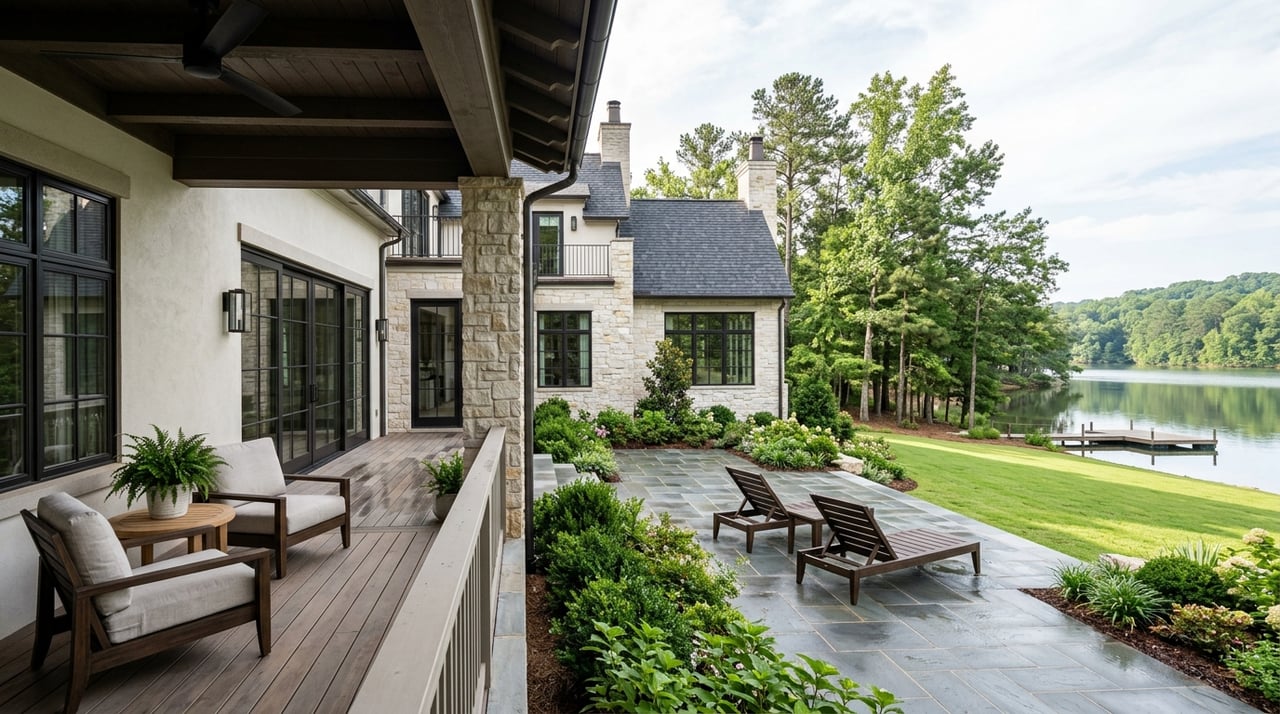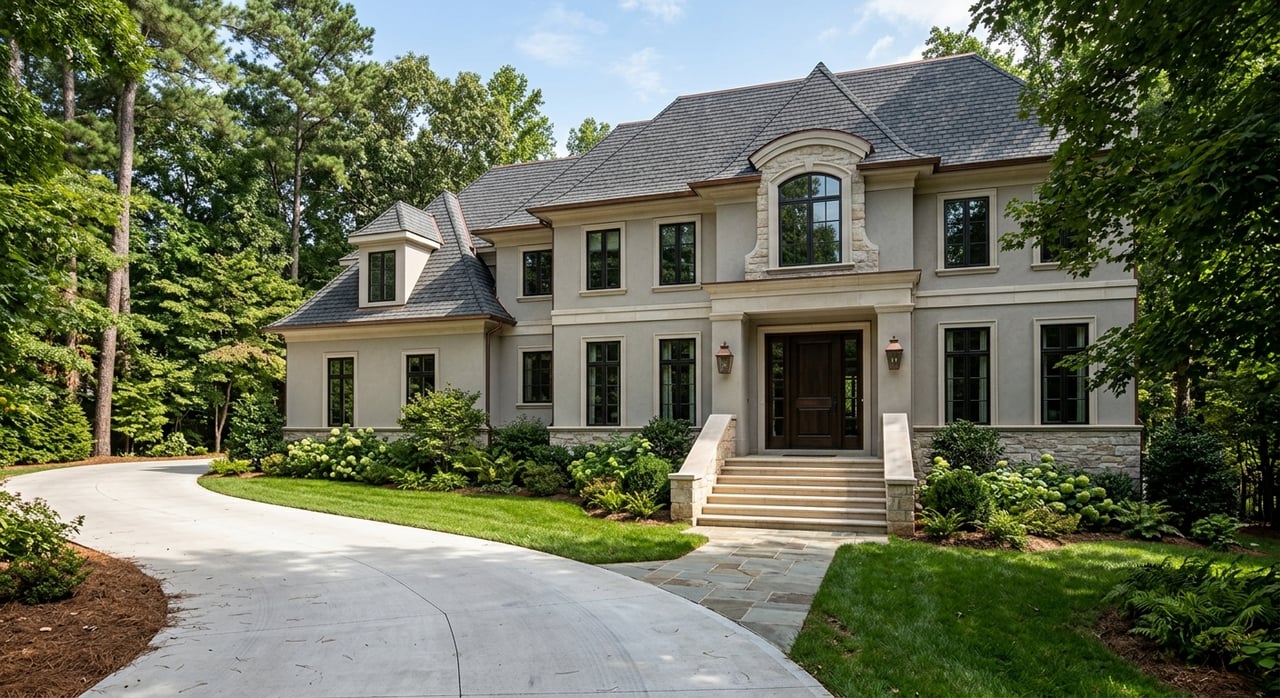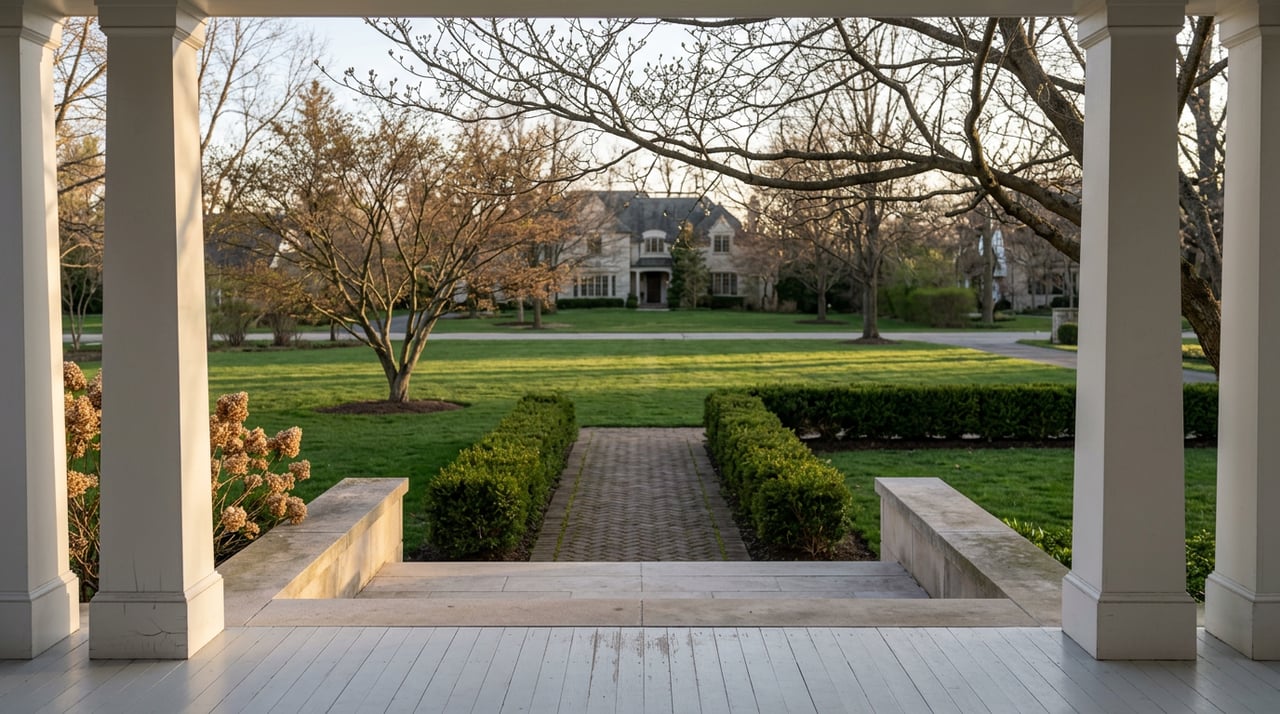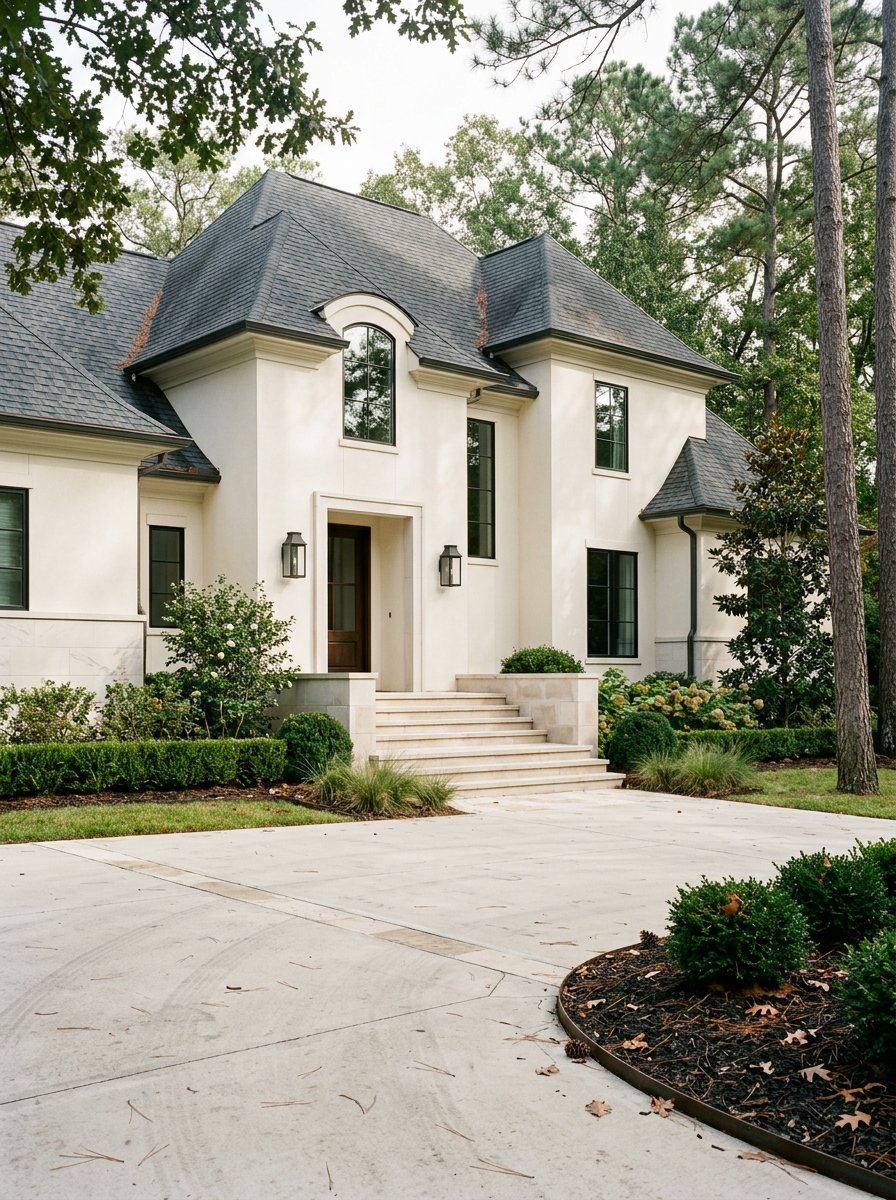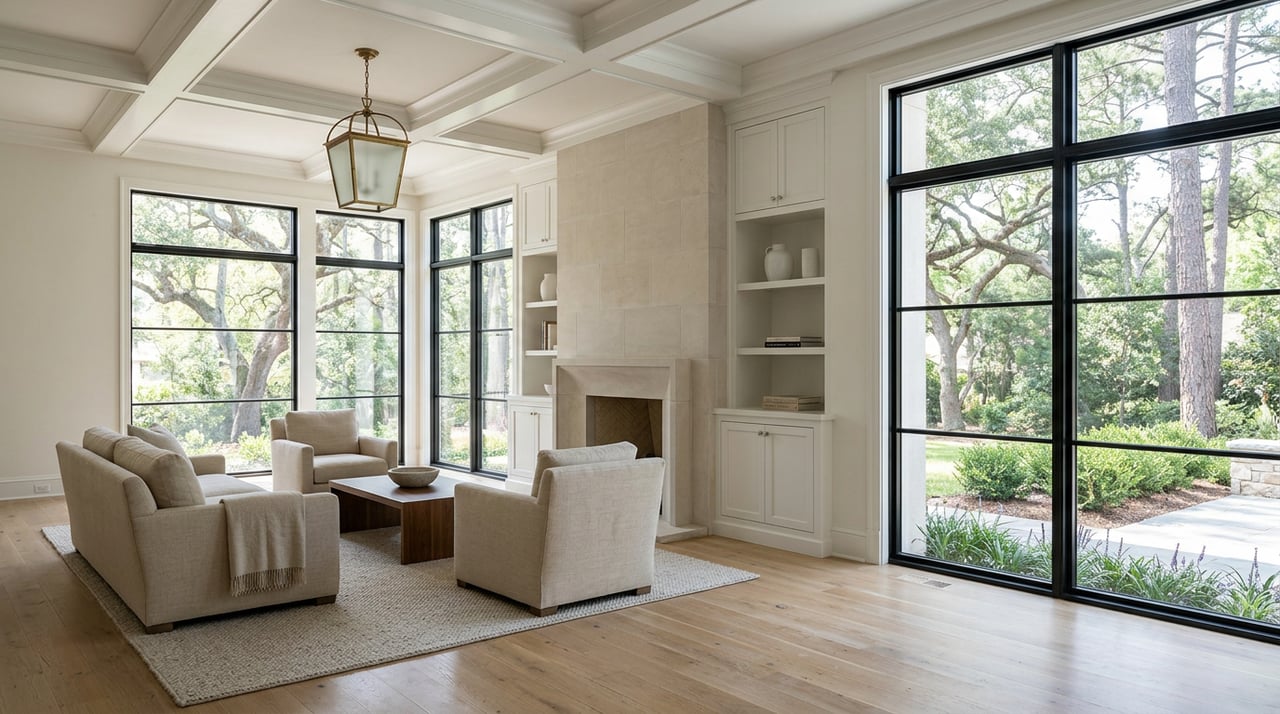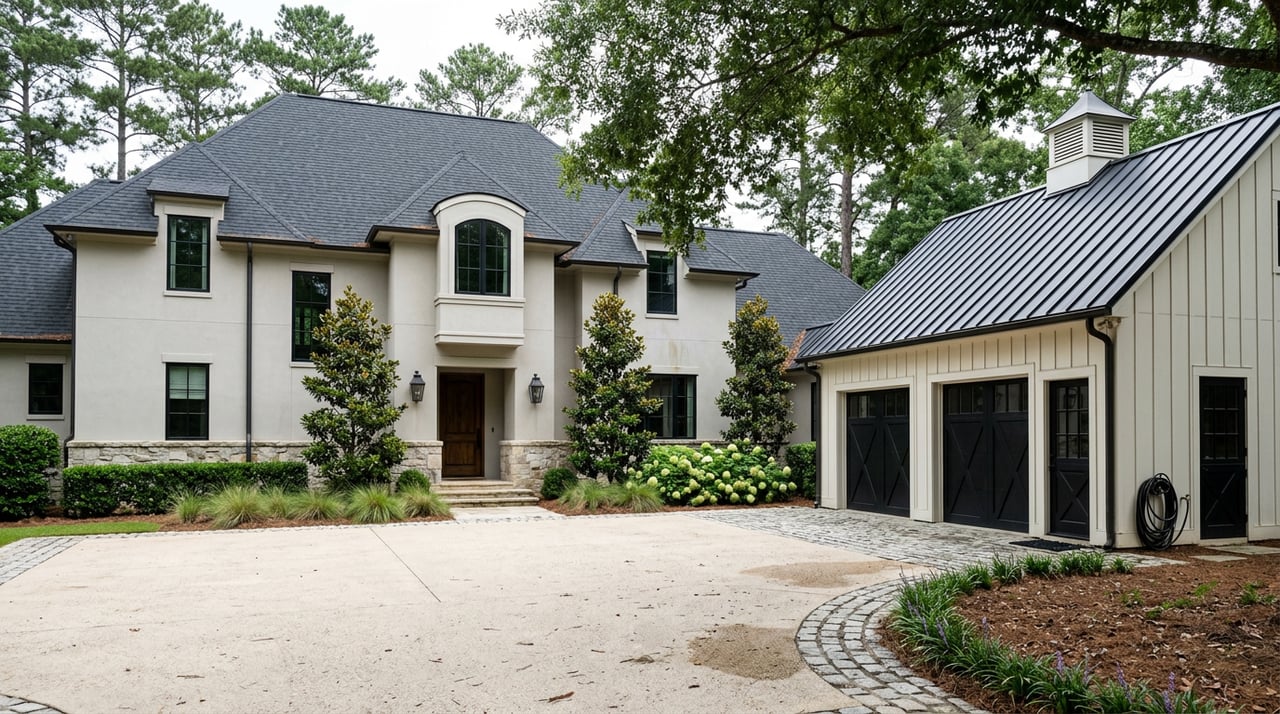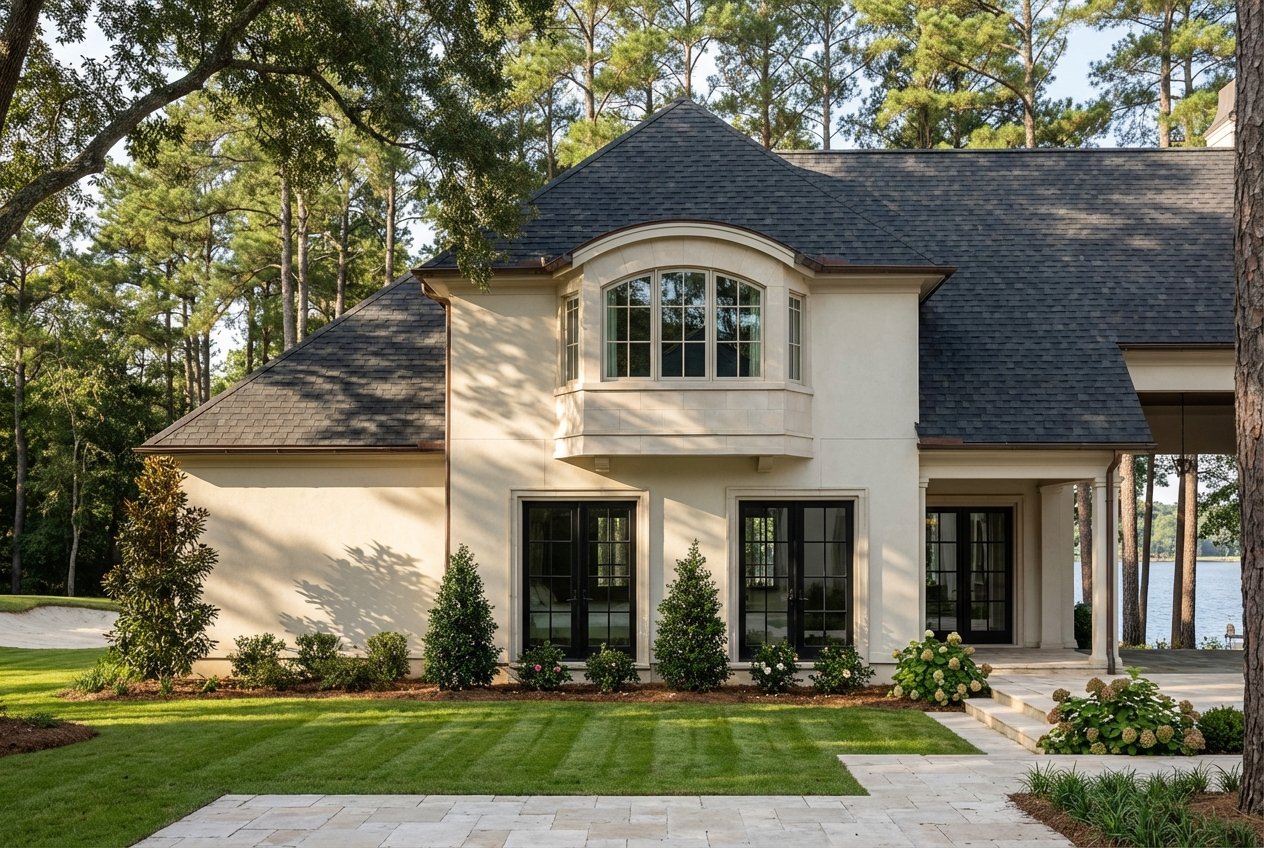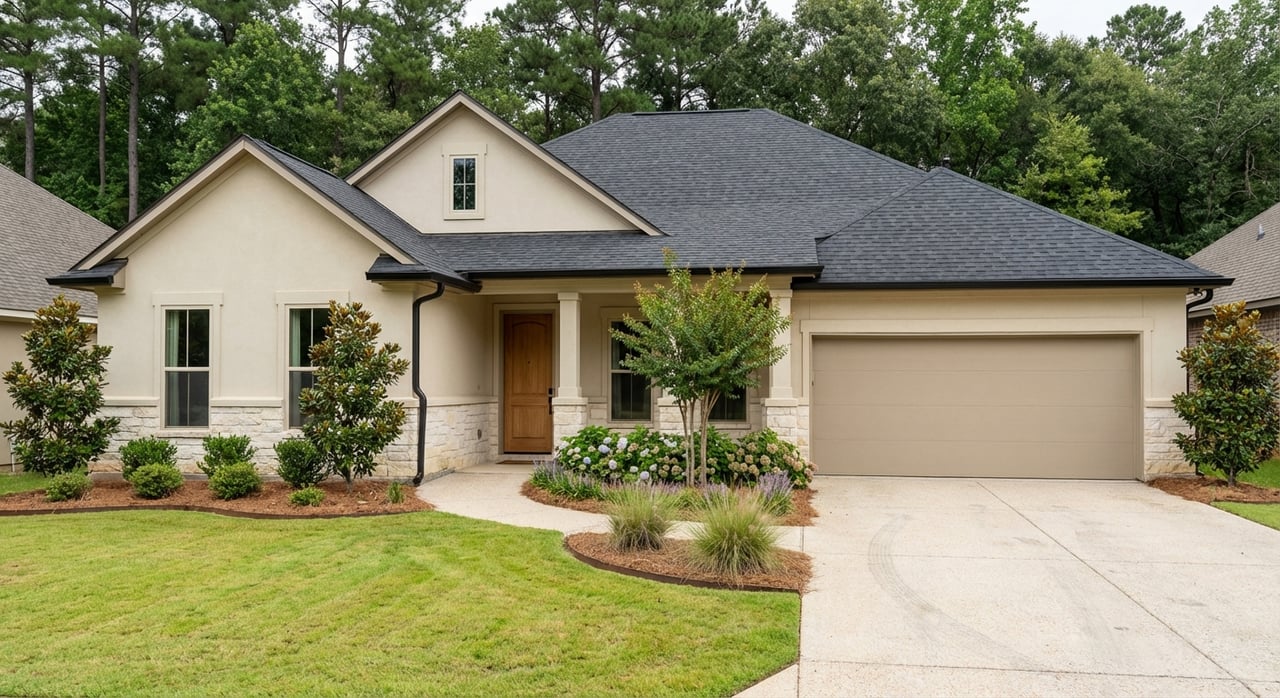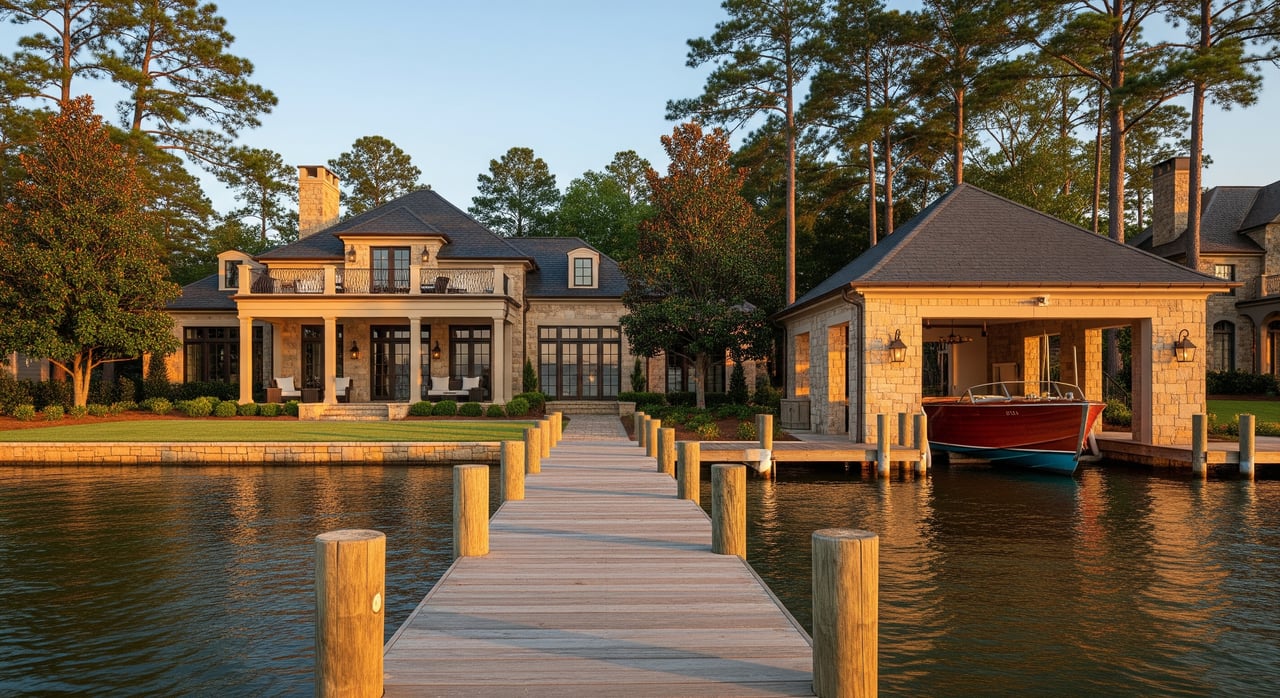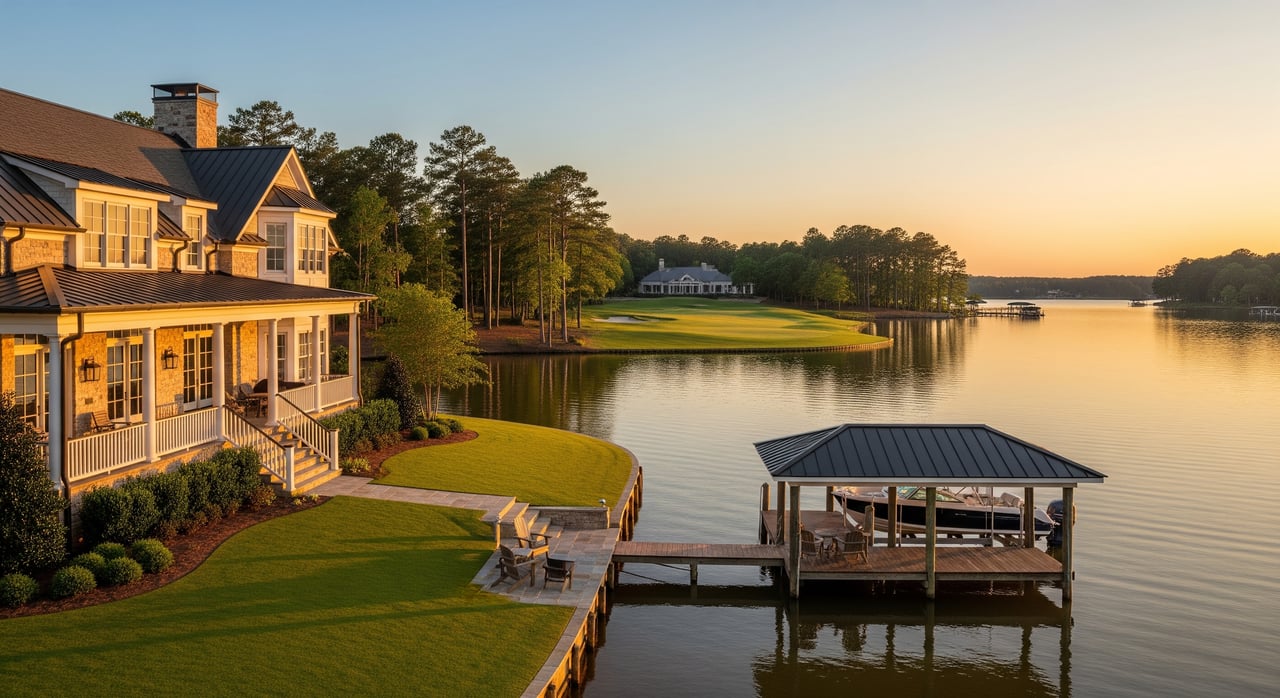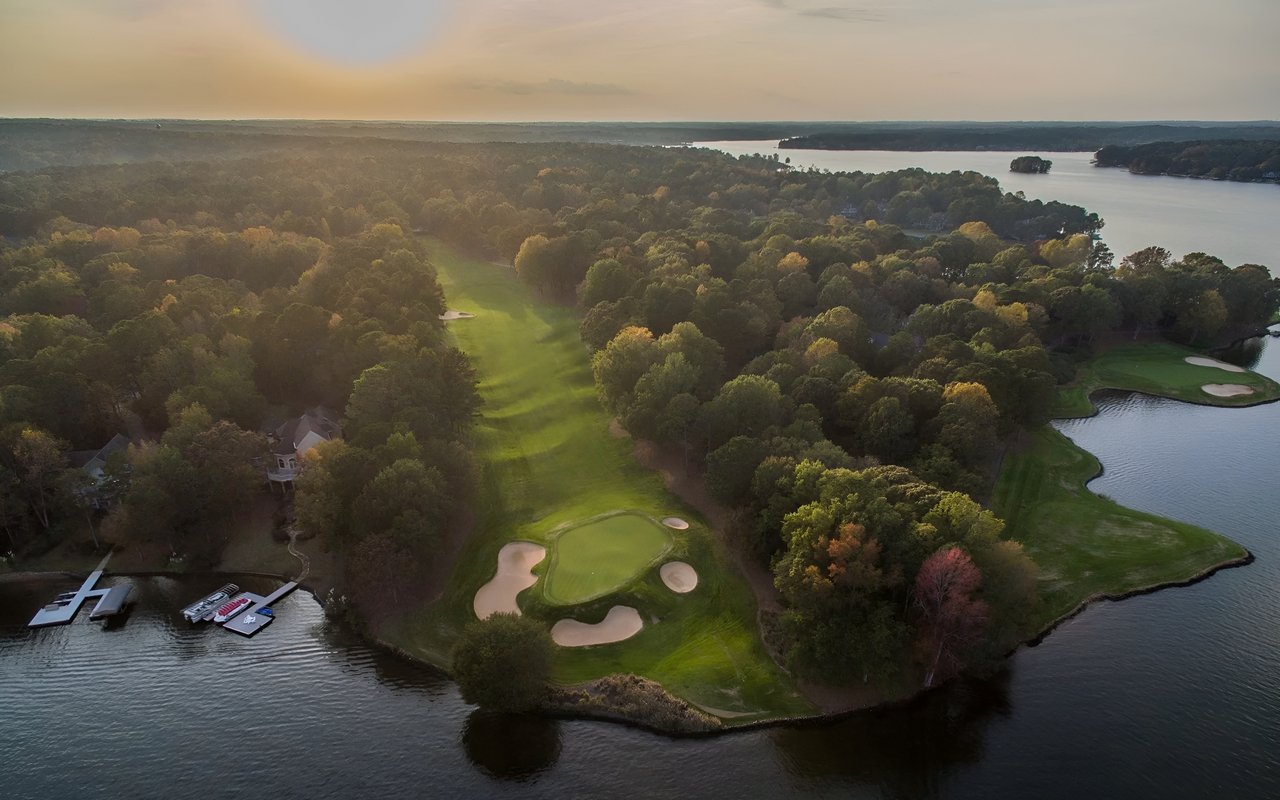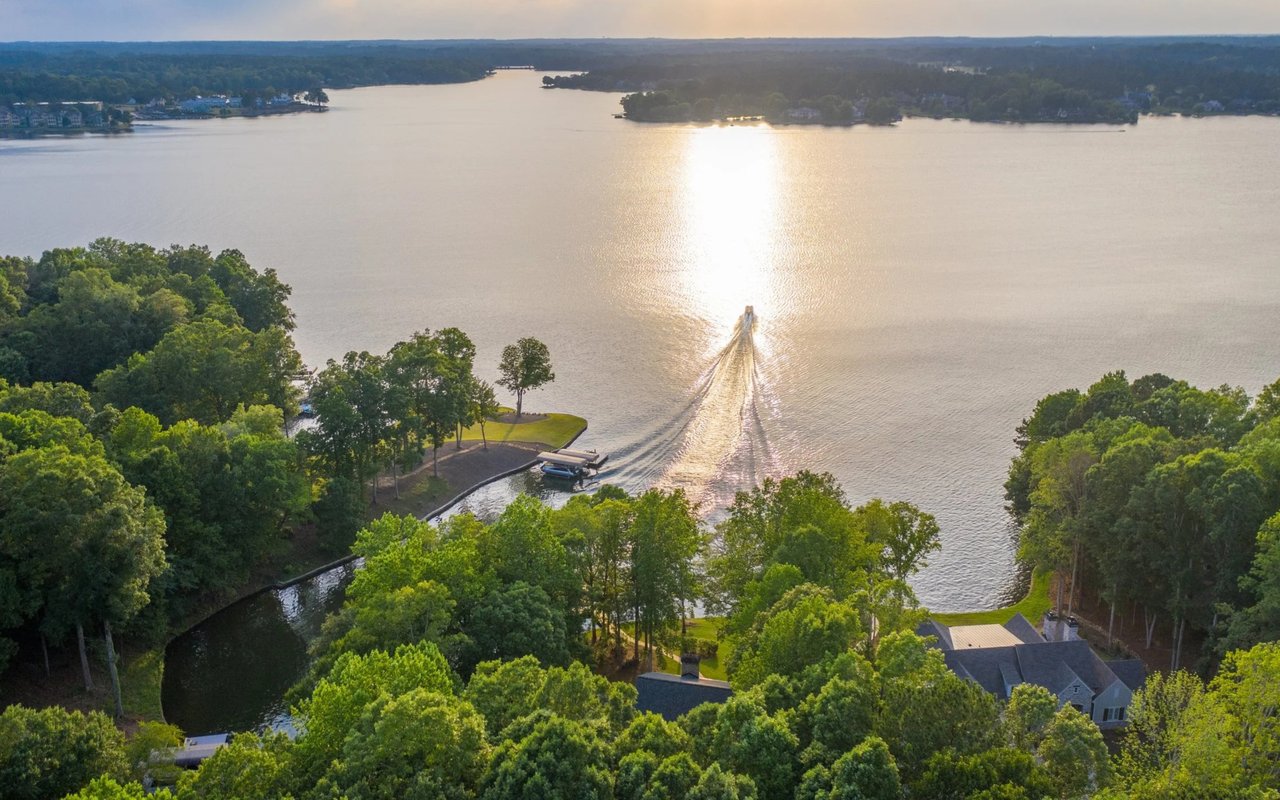
"If peace and quiet at an inflated rate is what you are looking for, this is the place."
A current Del Webb at Lake Oconee resident wrote that line in a public review, aimed at the community's rising homeowners association fee. Read as a complaint, it's a gripe about dues. Read as data, it's a clue about something bigger: in a neighborhood where the builder never left, the number that sets your home's value isn't your neighbor's closing price. It's whatever Pulte is currently offering down the street.
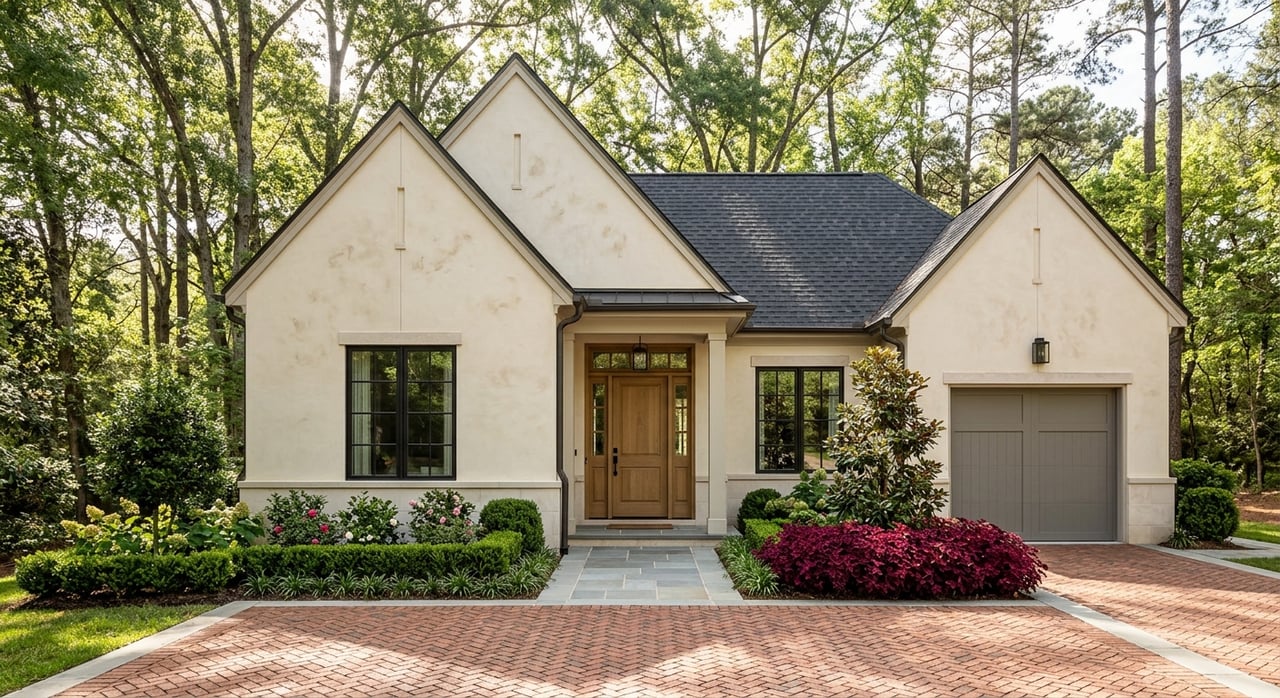
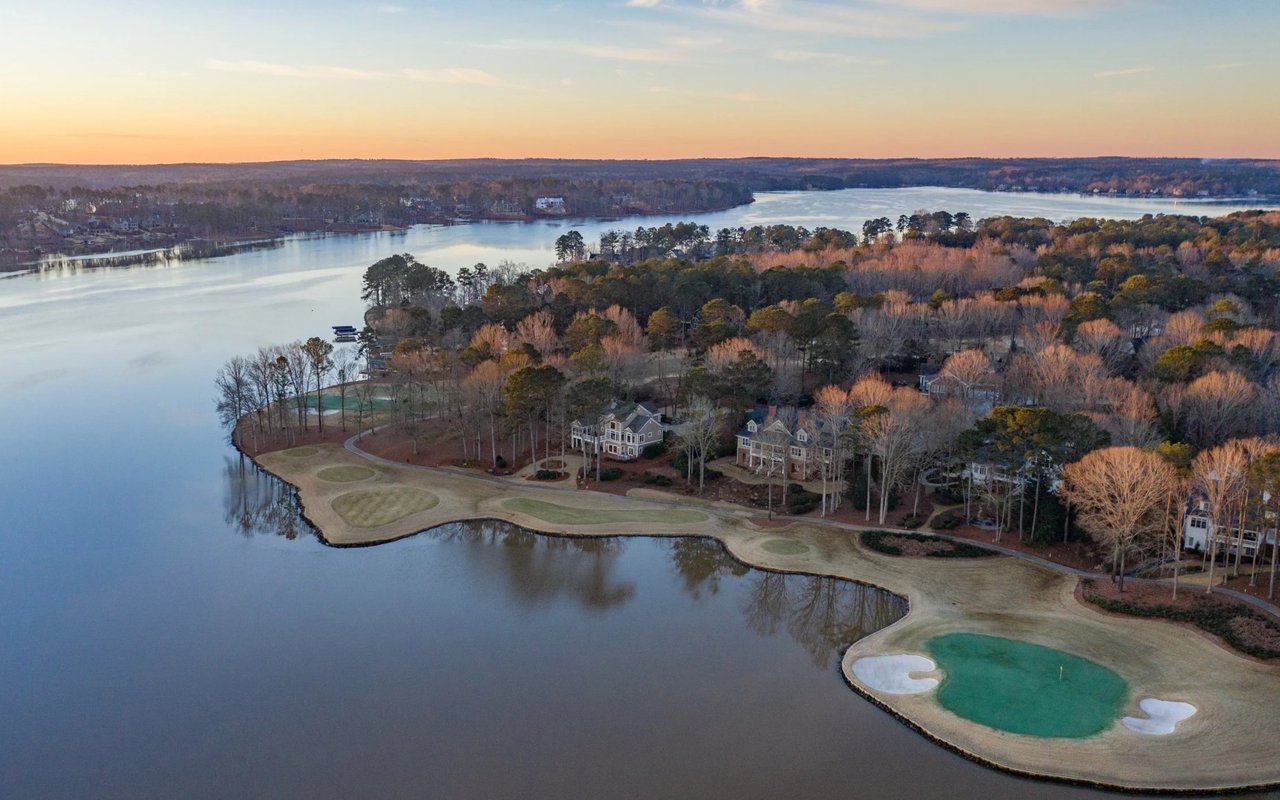
Del Webb at Lake Oconee broke ground in 2007. Nineteen years later, current listings show the builder is still actively selling homes there in 2026. That single fact changes how resale pricing, financing, and negotiation actually work in this community, and it's the piece most general buyer's guides skip past on their way to the amenity list.
A Builder That Never Left the Neighborhood
Two separate listing trackers capture this from different angles, and both point the same direction. As of August 2026, one shows eight single-family homes active in Del Webb at Lake Oconee, and four of those are new construction rather than resale, meaning roughly half of the available inventory belongs to the builder, not a homeowner. A separate new-construction tracker lists the community's status simply as "Selling," with five available homes and four already move-in ready.
However you slice the count, if you're listing a resale home in Del Webb at Lake Oconee this year, there's a real chance close to half of your direct competition is a builder's sales office rather than another owner. That's a different negotiation than the one most sellers prepare for.
The community itself has earned enough attention that this matters. Del Webb's own site notes it was ranked #6 Best Lake Towns to Live in Year-Round by Travel + Leisure, and it remains the only Del Webb community in the nation with direct access to Lake Oconee. Demand is real. That's exactly why the pricing mechanics underneath it are worth understanding, not just the lifestyle pitch on top.
Why the Entry Price Skews the Whole Comp Set
New construction pricing compounds the effect. As of August 2026, one national new-home tracker lists Del Webb at Lake Oconee homes starting at $352,990, a figure it frames as more than 10 percent below the broader area's average new-home price of $499,900. Meanwhile, the average list price across the community's active single-family listings runs closer to $506,749, and a separate 55-plus community database puts the average home price nearer $533,855.
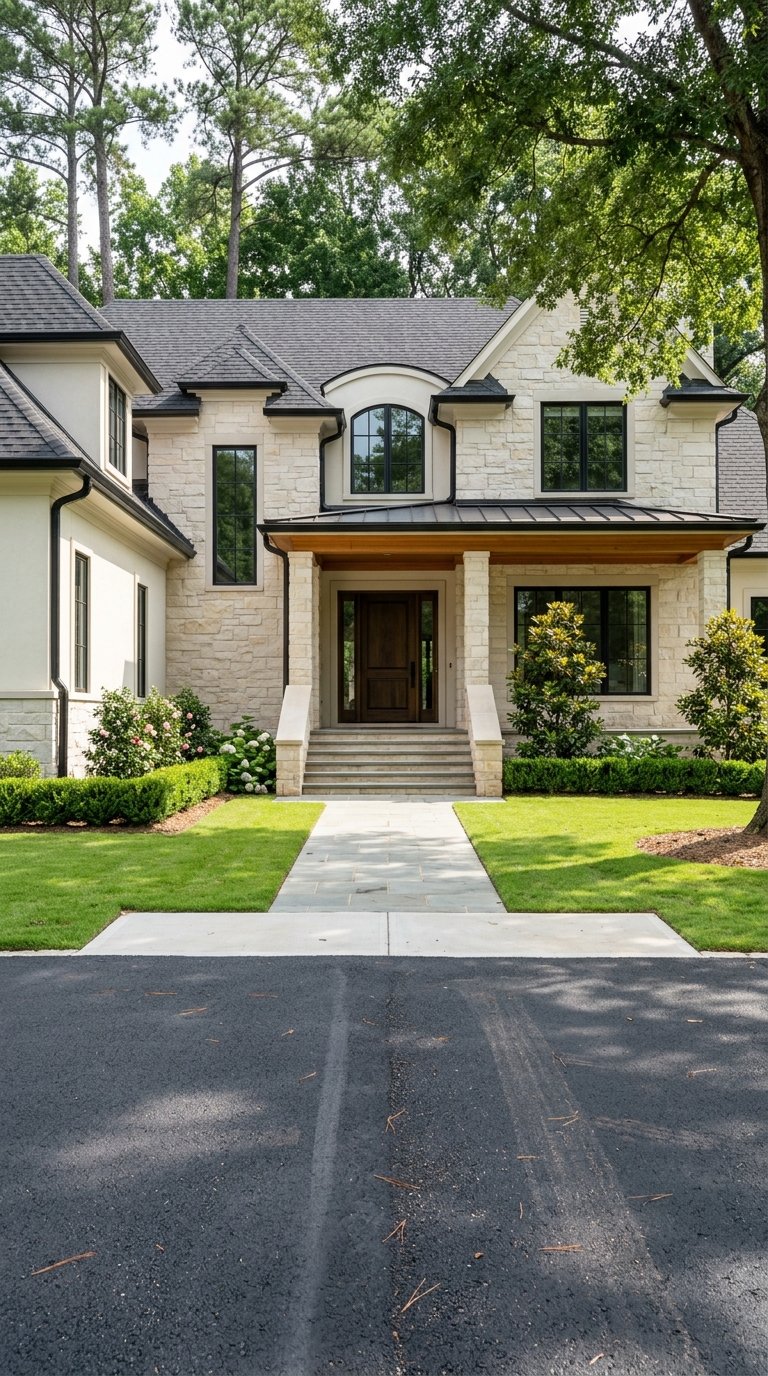
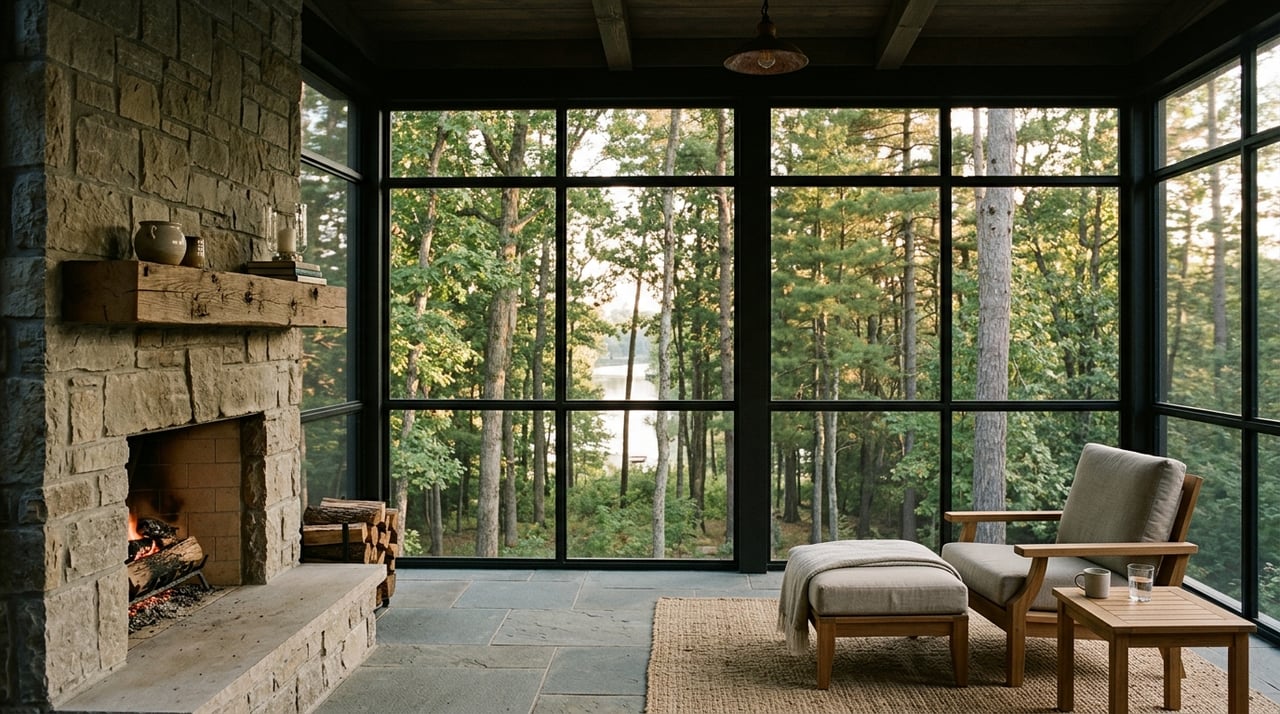
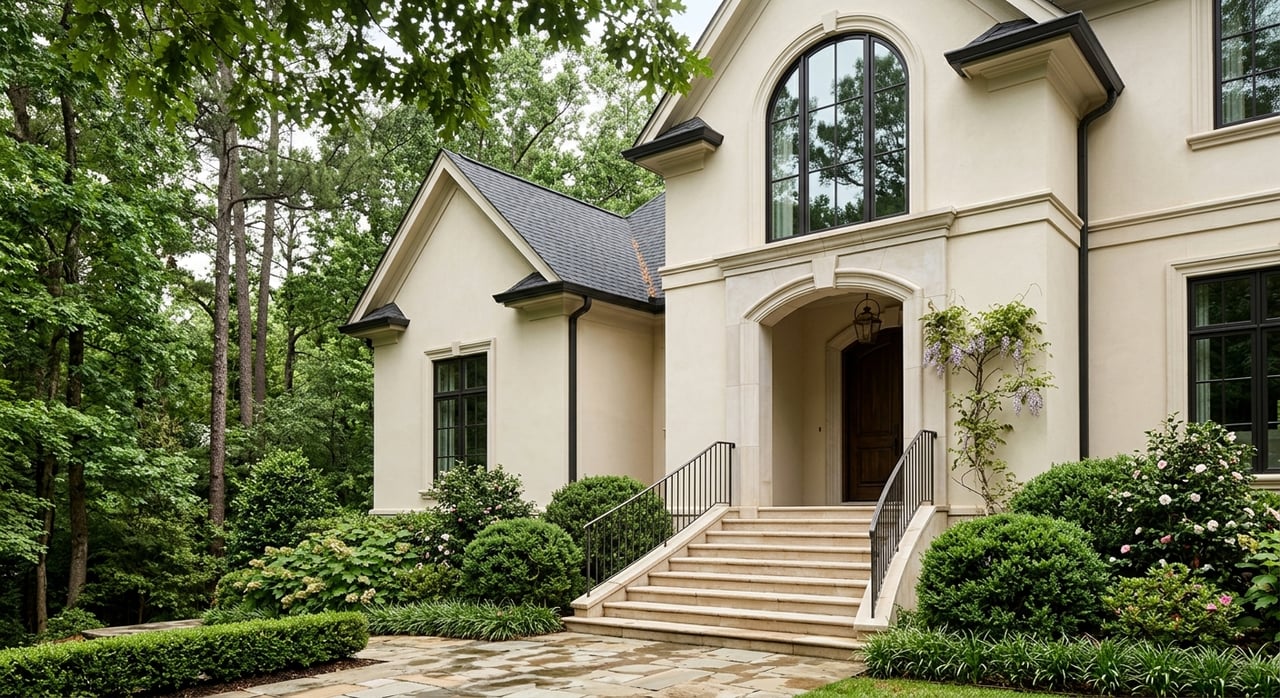
That gap matters more than it looks on paper. A buyer cross-shopping the neighborhood sees a brand-new, builder-warrantied home priced tens of thousands below the resale average before they ever walk through an existing home with a decade of settled landscaping, a finished screened porch, or paid-off upgrades already baked in. If you're the resale seller, you aren't pricing against last month's closed sale down the street. You're pricing against a floor plan the builder hasn't finished framing yet, and that floor plan starts the conversation lower than most sellers expect.
The Rate Resale Sellers Can't Match
Price is only one lever. Del Webb's own listing pages have recently advertised a subsidized 7/6 adjustable-rate mortgage, in the high-4 percent range, for buyers who build with Pulte, with the rate fixed for the first seven years before adjusting. Builder financing offers like this rotate throughout the year, so the exact number on any given week isn't the point. The structure is the point: a production builder with its own mortgage arm can buy down a buyer's rate in a way an individual homeowner selling a resale property simply cannot match without writing a check to cover it out of pocket.
For a buyer comparing a resale listing against a new-construction offer with a builder-subsidized rate, the effective monthly payment on the "more expensive" resale home can end up higher than the payment on the "cheaper" new build, even when the sale prices say the opposite. That's the kind of detail that shows up at the negotiating table, not on a portal search page.
New Construction vs. Resale, Side by Side
| Factor | New Construction (Builder) | Resale |
|---|---|---|
| Starting price | From $352,990, per current builder-tracking listings | Community average runs $506,749 to $533,855 |
| Financing edge | Builder-subsidized rate buydowns rotate through the year | Standard third-party financing only |
| Dues history | Enters at today's rate, no track record yet | May carry a documented, multi-year increase pattern |
| Lot and landscaping | New sod, young trees, builder-grade finishes | Established trees, mature beds, owner upgrades |
| Warranty | Builder warranty included | Depends on the age of major systems |
What the Dues Trend Means for Your Hold Period
As of August 2026, homeowners association dues across the community range from $32 to $380 a month depending on the phase and home type, according to one listing aggregator's review of current homes. That wide spread reflects different products and different construction phases, which is normal in a community still being built. What's less normal is the direction: a current resident's public review states dues have risen 5 percent a year and that management expects that pace to continue.
Run that forward using the rule of 72, a quick way to estimate compounding by dividing 72 by the growth rate, and a due increasing 5 percent annually doubles in a little over 14 years. A buyer planning to hold a home here for a decade or more should budget for a due that looks meaningfully different by year ten than it does at closing.
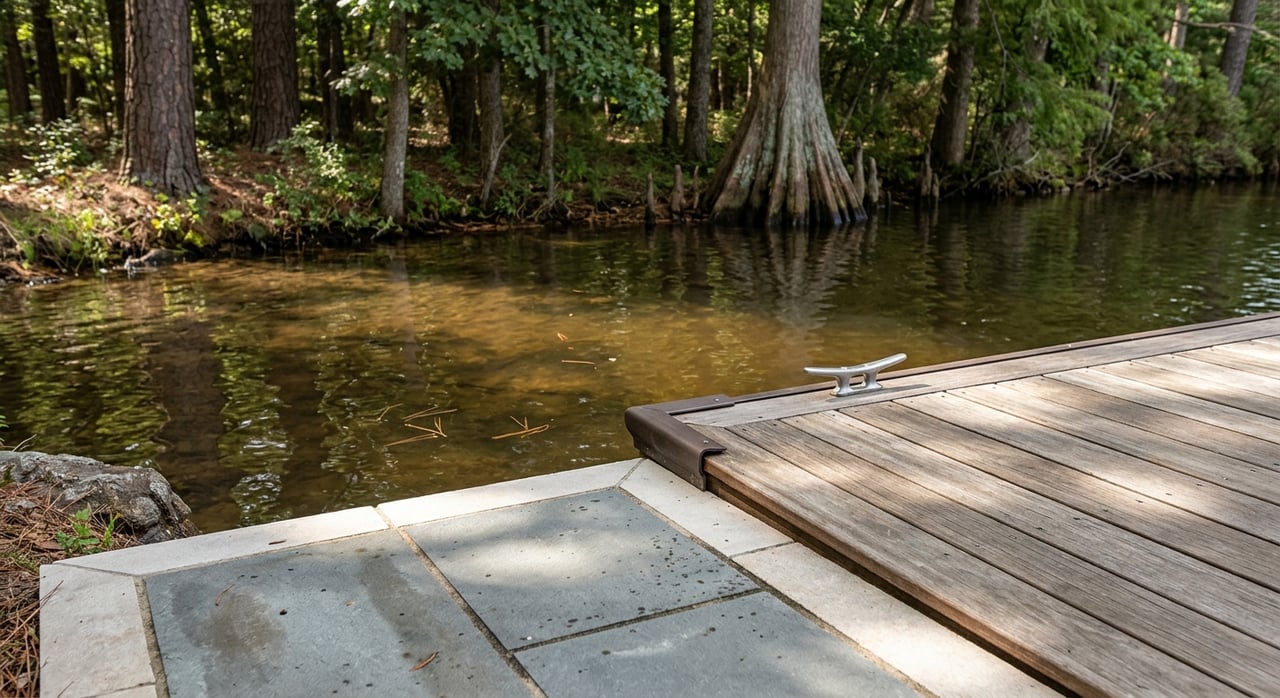
Those dues fund a genuinely large operation. Multiple listings describe a 21,000-square-foot clubhouse and amenity center, tennis and pickleball courts, bocce, and a lakeside pavilion, and running a program at that scale only gets more expensive over time. This actually works in a resale seller's favor if you frame it correctly. A home with a documented dues history gives a buyer a real trend line to budget against, something a brand-new phase without payment history can't yet offer.
A Checklist Before You Price Against the Builder
- Ask the builder's sales office for the current price and incentive sheet on the model closest to your resale home's size, not last quarter's published average.
- Request the HOA's five-year dues history in writing, not just this year's rate.
- Compare total finished square footage and lot maturity against what the builder currently offers, since new construction and a decade-old lot solve different problems for different buyers.
- Confirm whether any late-phase amenity work is still funded through the builder or has shifted to the HOA, since who pays for what changes as a community moves from construction toward resident control.
- Ask directly whether a builder rate buydown or incentive is active right now, since these terms change often and neither buyers nor sellers should assume the last quote is still on the table.
A Short FAQ
Is Del Webb at Lake Oconee still building new homes in 2026? Yes. The community broke ground in 2007, and current listing data shows active new-construction inventory still selling alongside resale homes.
Do resale buyers get access to the same financing incentives as new-construction buyers? No. Builder-subsidized rate buydowns run through the builder's own mortgage program and generally apply only to homes purchased directly from the builder, not to resale transactions.
How much have HOA dues actually increased? Public listings currently show dues ranging from $32 to $380 a month depending on home type and phase. A resident review reports a 5 percent annual increase pattern, though buyers and sellers should request the official multi-year dues history directly from the HOA rather than rely on any single estimate.
What This Actually Means If You're Buying or Selling Here
The headline price on a Del Webb at Lake Oconee listing was never the whole story, but in most 55-plus communities that's a minor footnote. Here it's structural. A builder still holds inventory and financing leverage nearly two decades into the project, and that shapes what a resale home can realistically command, how fast it moves, and what a buyer's monthly payment actually looks like once financing enters the picture.
If you're weighing a resale purchase against new construction in Del Webb at Lake Oconee, or preparing to list a home there and want a pricing strategy built around what the builder is currently offering rather than around last quarter's average, Boatright Realty Group can walk you through the current inventory on both sides of that comparison. Contact us. Let's find your Lake Oconee home.